Illegal construction in Croatia to become a criminal offense
On this page
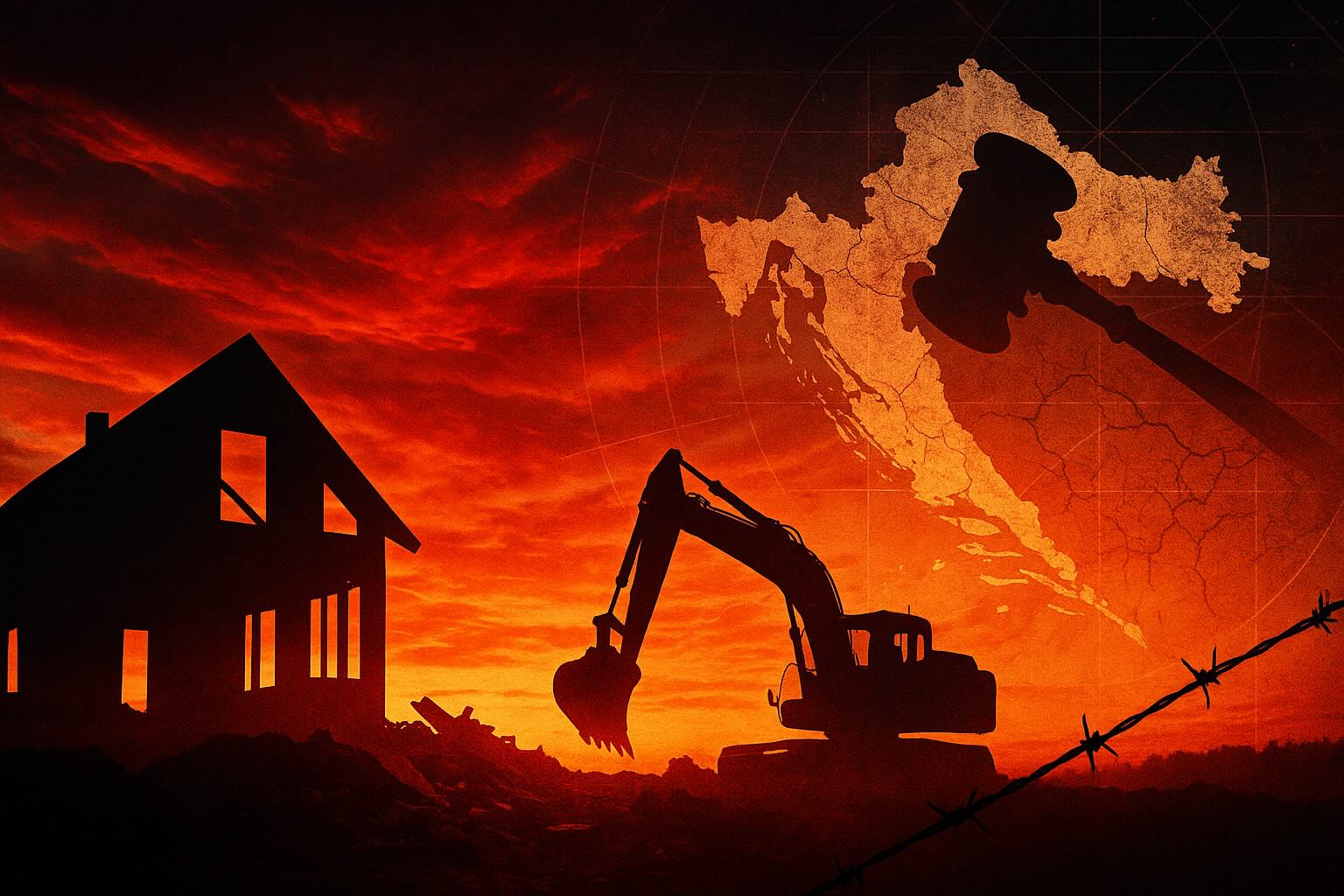
The Croatian government is preparing a major legislative reform aimed at ending illegal construction activities and protecting the landscape. According to Branko Bačić, Minister of Spatial Planning, Construction, and State Assets, illegal construction will soon be classified as a criminal offense, as part of a broader reform of construction and housing laws.
Last opportunity for retroactive legalization
When presenting the new Affordable Housing Act, Bačić announced that property owners will once again have the opportunity to legalize buildings constructed before June 21, 2011, for which no application had previously been submitted. Although the original deadline for legalization has expired, many owners failed to apply, which now complicates the management of their properties. “With this legislative amendment, we are reopening the process for older buildings. However, anyone who built after that date will not be eligible for legalization, and such structures will be removed,” the minister said.
Bačić noted that the measure will not bring significant revenue to the state. While in 2011 around 900,000 legalization requests were submitted, this time the number is expected to be about ten times lower.
Illegal construction as a criminal act
Responding to criticism that the state simultaneously offers legalization opportunities and imposes penalties, Bačić explained that these are different categories. “Given the limited number of construction inspectors, we have delegated the authority to monitor and stop illegal construction to local municipal guards,” he said.
The new amendment to the Criminal Code goes even further — illegal construction will now be formally classified as a criminal offense. At the same time, the ministry is developing a digital system based on satellite imagery capable of automatically detecting land-use changes. The application is expected to be operational by 2027 and should make enforcement much more efficient. “The key is to intervene immediately, before construction expands,” Bačić added.
The Statileo program and protected tenants
Another part of the reform involves continuing the Statileo program, which has sparked debate among pensioners’ and tenants’ associations who have called for its repeal due to alleged constitutional violations. The minister emphasized, however, that the state had to address long-standing injustices toward apartment owners whose properties were nationalized after World War II. “The new law has passed constitutional review and balances the right to housing with the constitutional property rights of former owners,” Bačić explained. So far, about 1,300 applications have been received, and around 200 cases have already been resolved.
The ministry also plans to renovate existing state-owned apartments and build new ones in Split and Zagreb for protected tenants. These tenants will have the option to move into these apartments, purchase them at a discount, or make a one-time payment.
Energy efficiency and affordable housing
Under the government’s program to reduce energy poverty, 50 out of 107 planned residential buildings have already been renovated. Meanwhile, new affordable housing units are being built in subsidized areas where rents average around €0.36 per square meter.
The public consultation on the Affordable Housing Program received 111 comments. According to the minister, participation criteria will be adjusted, and the inclusion of small business owners will be considered. A new rental housing law is also being prepared to provide greater legal security for both landlords and tenants.
Support for young buyers and housing price statistics
Bačić also noted that within three months, 1,830 applications had been submitted for the refund of property purchase taxes under the first-home buyer incentive program. Of these, 830 applications have already been processed, resulting in approximately €7 million paid out. The average applicant is 32 years old and purchases an apartment of about 66 m².
The ministry also published updated price data: “Based on verified contract data from this year, the average apartment price in Croatia is €2,285 per square meter excluding VAT, while in Zagreb it stands at €2,487,” the minister concluded.
Current property listings
- Property in Zagreb 1,719
- Property in Split 823
Found some inspiration? Browse current listings.
Filtered search by location, price and property type.Writes about Croatian real estate for CroReal.com.
Payments in Croatia: what HR01, HR03 and other models mean

Bačić: preventing real estate business disguised as tourism

Property Costs in Croatia – Taxes and Fees 2025/2026
Found some inspiration? Browse current listings.
Filtered search by location, price and property type.